
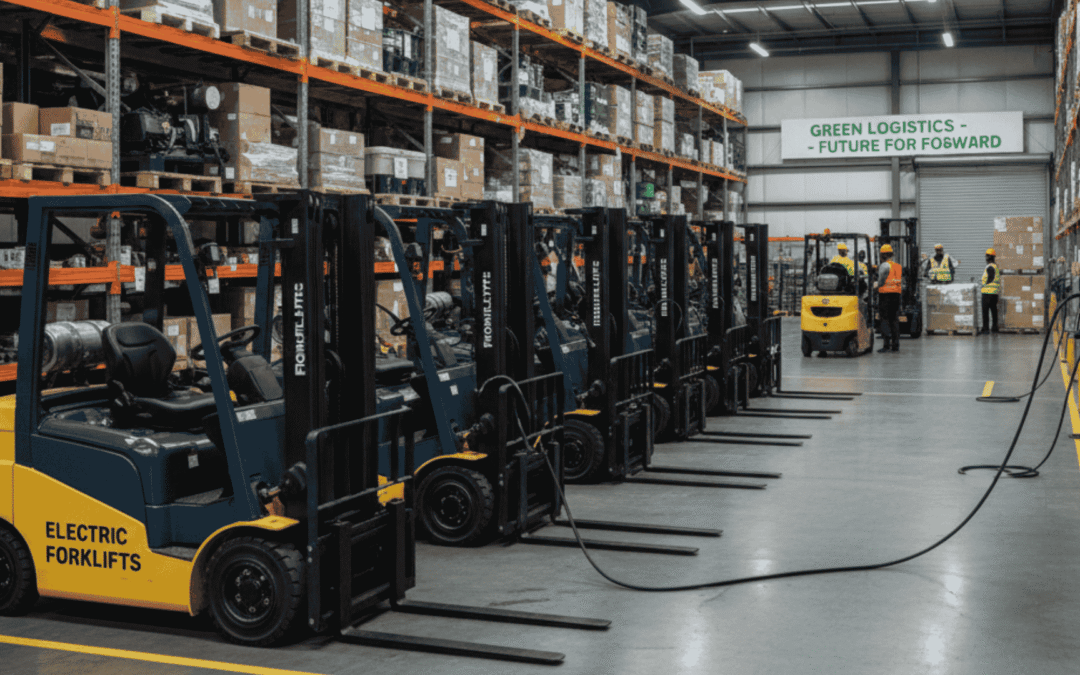
The past few years have witnessed a transformation in warehouse operations.
Whether it is automation or inventory tracking, businesses are constantly looking for smarter, cleaner and more cost-effective ways to operate. And material handling is not an exception, especially the switch from diesel or gas forklifts to electric forklifts.
If you operate a warehouse, you must have realized the rate at which electric models are replacing their traditional counterparts. But what makes electric models such a preferred choice? Let’s walk through this guide to know everything about electric forklifts, including how they work, their benefits and why they are the best fit in the current operations.
What Is an Electric Forklift?
Electric forklift is a lift truck that is driven by rechargeable batteries rather than an internal combustion engine. It is designed to move, lift, and stack materials efficiently–just like a gas or diesel forklift–but without the emissions or noise
The electric forklift battery is the primary source of power and comes in two types: lead-acid and lithium-ion. These batteries are able to be recharged repeatedly and offer hours of operation with one charge.
There are many models available in the market today, some are heavy-duty electric forklift trucks that are used in large warehouses, and there are those that are small, such as the small electric forklift, which is ideal in tight areas.
The Reason Modern Warehouses are Switching to Electric Forklift
Warehousing and logistics companies are constantly feeling pressure to be sustainable, efficient, and safe. Electric forklifts tick all these boxes, making them a preferred choice among industries.
Environmentally Friendly Operation
Sustainability is one of the priorities for numerous companies. Conventional forklifts that are either diesel or LPG powered release harmful gases that cause indoor air pollution and environmental degradation.
On the other hand, an electric forklift does not emit any emissions. This makes it suitable for the indoor operations, food storage and any company that intends to achieve environmental objectives.
Electric forklifts can also be powered by renewable energy, which means that they can have a net-zero carbon footprint, which can help companies minimize their carbon footprint to a minimum.
Lower Operating Costs
Although the initial cost of an electric forklift might be more than their diesel counterpart, the savings in the long run makes it a wiser choice.
Electric forklifts contain fewer moving parts, meaning fewer wear and tear and fewer maintenance problems. You don’t need to worry about oil changes, fuel filters, and exhaust. The electricity is also cheaper than fuel particularly when it is charged during off-peak hours.
These small savings will eventually result in a significant decrease in overall cost of ownership.
Noise-Free and Less Noisy Workplace
Busy warehouses are likely to struggle with a lot of noise. Diesel and gas forklifts add to this noise level, making work environment more stressful.
Forklift trucks that are powered by electricity are virtually silent. This supports the communication of workers and minimizes fatigue that may be brought about by the continuous exposure of noise. Less noisy environment also enhances focus and general safety at the workplace.
Small and Portable Construction
A small electric forklift can be a big difference when your warehouse is narrow, or has a limited space. Electric models are smaller and manageable compared to the traditional forklifts.
Their smaller turning radius enables operators to maneuver goods effectively in a small area. It minimizes the risk of accidents or product damage. This flexibility of design makes them suitable for e-commerce warehouses, cold storage and other space-sensitive operations.
Stable Power and Performance
Modern forklift models have an impressive power and endurance due to the improvements in electric forklift batteries. An example of such is the lithium-ion batteries, which can provide a steady performance even during discharge.
Electric forklifts have a consistent torque during operation unlike internal combustion engines which can lose power when the fuel is depleted. This stability will guarantee easy handling of the materials and enhanced productivity within the day.
Easier Maintenance
Electric forklifts need less maintenance as compared to gas or diesel due to the reduced number of mechanical parts. You don’t need to change the fluids. The wear and tear on belts or spark plugs are minimal.
The routine inspections include checking the electric forklift battery, charging system, and tires. This ease of use translates to less downtime, fewer unexpected repairs and less maintenance expenses in the long-term.
Longer Lifespan
An electric forklift battery can last several years with proper care and frequent charging. The newer lithium-ion models have an even longer life and charge quickly than the older lead-acid models.
Also, since electric forklifts have reduced vibration and engine load, the machines themselves tend to be more durable than their fuel-powered counterparts- another benefit that increases your ROI.
Should you Buy or Rent an Electric Forklift?
In case you have a long-term operation and you need a constant material-handling requirement, then it is a better option to buy an electric forklift on sale. It is a long term investment and it will pay off in the long run, particularly with the low operating and maintenance costs.
You can also opt for used electric forklifts if you don’t have a budget to buy a new one. Even a used model that is well maintained can ensure reliable performance over the years.
When to hire an electric forklift?
An electric forklift rental may be a more suitable choice in case your business has seasonal needs or temporary projects. Renting allows you to be flexible, you can scale up or down according to workload. Plus, you can experiment with the various models to pick the right option when you decide to purchase a forklift.
Knowing the Electric Forklift Batteries
The battery is the life and soul of any electric forklift. It operates the machine including the lifting and steering. To maximize your investment, it is important to know the types of batteries and how to take care of them.
Lead-Acid Batteries
These are the conventional kind of electric forklift batteries. They are cheap and dependable but need frequent maintenance such as filling up water and equalizing charges.
Lithium-Ion Batteries
These batteries are more advanced and can be charged faster, longer and they do not need maintenance. They are also more economical in terms of energy consumption and operators can charge during breaks and prevent downtime.
Lithium-ion batteries are more costly initially, but in many cases, they will pay back in terms of better performance and reduced maintenance expenses.
How to Maximize the Life and Performance of Your Electric Forklift
- Do not overcharge or profoundly discharge the electric forklift battery.
- Although they do not require much attention, frequent checkups ensure that minor problems do not escalate to major problems.
- Train your operators. Professional operation minimizes accidents and increases the lifespan of your electric forklift truck.
- Select the right forklift to your load needs- in case you are dealing with light loads, a small electric forklift is more effective.
- Keep the area clean as battery terminals can be impacted by dust and debris and impaired.
Final Thoughts
Switching to electric forklift is not a mere trend, but a practical step towards smarter, safer and more sustainable warehouse operations. Electric models are transforming the way materials are moved on a daily basis with improved electric forklift batteries, reduced running costs, and reduced noise levels.


